 +86 18531742341
Leave Your Message
Ringlock Scaffolding Accessories deserve close attention because scaffold safety depends on the smallest connections. A rosette, wedge head, ledger end, or adjustable base jack can affect how a working platform fits together. On site, crews need components that connect consistently, resist wear, and suit the system’s load requirements. Small parts matter.
The U.S. Bureau of Labor Statistics reported 1,075 fatal work injuries in the construction industry in 2023. That figure covers construction as a whole, not scaffolding alone, but it underscores why dependable equipment and careful assembly deserve serious consideration. OSHA’s scaffold standard states that each scaffold and component must support its own weight and at least four times its maximum intended load. Buyers should therefore check compatibility, material quality, dimensions, and inspection records—not rely on appearance alone.
There is no source material here to verify a named expert’s quotation, so I will not invent one. OSHA’s requirement offers a clear benchmark instead. A sound accessory should fit its intended system and perform predictably under specified conditions. Ringlock Scaffolding Accessories can help make assembly more orderly and adaptable, especially where crews face changing heights or tight site layouts. Still, no component removes the need for competent design, inspection, and trained workers. That part is easy to overlook.
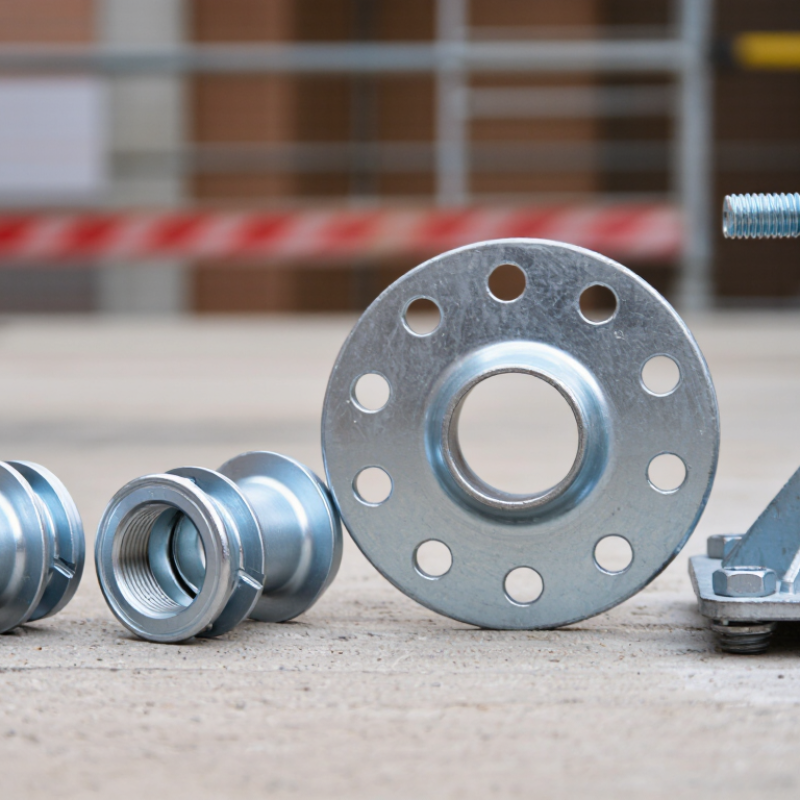
Ringlock scaffolding accessories are the parts that connect, support, and protect a scaffold structure. Standards carry vertical loads, while horizontal ledgers lock into circular rosettes at set heights. Wedges secure the connections with a firm tap. Diagonal braces reduce sway, and base jacks help level the frame on uneven ground. Small parts matter.
Working platforms, guardrails, and toe boards complete the usable bay. A platform rests across ledgers, giving workers a stable surface; guardrails and toe boards help reduce fall and dropped-object risks. The load travels from the platform through the ledgers and standards to the supporting ground. That path depends on sound connections and a properly prepared base.
Assembly is straightforward in principle, but small errors can hide in a busy work area. A wedge may look seated without being fully engaged, or a base jack may rest on soft soil. Fit is not proof. Check each connection, inspect components for bending or cracks, and follow the system supplier’s instructions and site requirements. Have a competent person assess the setup before use, especially when the ground, height, or loading differs from the usual arrangement. The details deserve a second look.
| Accessory or Component | Main Function | How It Works in the System | Typical Application | Key Selection Consideration |
|---|---|---|---|---|
| Standard (vertical member) | Provides the main vertical support and carries loads through the scaffold structure. | Rosette connection points are fixed to the standard. Ledgers and braces attach at these points using compatible wedge-head fittings. | Forms the vertical framework of access towers, work platforms, and temporary support structures. | Check the required system configuration, connection compatibility, condition, and load requirements. |
| Ledger (horizontal member) | Connects standards horizontally and helps define scaffold bays and platform levels. | Wedge heads at the ends engage with rosettes on the standards. The connection is secured by driving the wedges into position as specified by the system instructions. | Supports the scaffold layout and provides connection points for transoms and platform components. | Select the length to suit the designed bay spacing and use only components designed to connect together. |
| Diagonal brace | Helps resist sway and maintain the scaffold’s stability and shape. | Connects scaffold members diagonally, creating braced bays that help transfer lateral forces through the structure. | Used in scaffold elevations and bays where bracing is required by the design or erection instructions. | Follow the scaffold layout and bracing pattern; do not omit or reposition braces without approval. |
| Transom | Spans between ledgers to support scaffold boards or platform units. | Seats across the scaffold bay and transfers platform loads to the supporting ledgers and standards. | Creates support for working platforms and helps maintain the intended platform arrangement. | Confirm the transom type and spacing are suitable for the platform components and specified loads. |
| Adjustable base jack | Provides a level, adjustable starting point at the base of a scaffold. | A threaded stem adjusts the base height within its permitted range; the base plate spreads the load onto a suitable supporting surface. | Used at the foot of standards to accommodate minor ground-level variations. | Keep adjustment within the manufacturer’s limits and use appropriate sole boards or foundations where required. |
| Adjustable U-head jack | Provides an adjustable bearing point for supporting beams or other designed members. | The threaded stem adjusts the height, while the U-shaped head locates and supports the member placed within it. | Commonly used in temporary support arrangements designed for beams or formwork components. | Use only for the intended support arrangement and verify capacity, bearing, and restraint requirements. |
| Steel platform or scaffold board | Creates the working surface for personnel and materials. | Rests on the designated transoms or platform supports and must be secured and arranged to prevent unsafe gaps or movement. | Provides access and a working area within a scaffold bay. | Check platform condition, support span, load rating, retention, and applicable site requirements. |
| Guardrail and intermediate rail | Help protect workers from falling at exposed platform edges. | Attach to compatible standards or designated connection points to form a protective barrier around the platform. | Installed at open sides and ends where edge protection is required. | Install the complete edge-protection arrangement in accordance with the design and local safety rules. |
| Toe board | Helps prevent tools and materials from sliding or being kicked off a platform edge. | Fits along the platform perimeter and works with guardrails as part of the edge-protection arrangement. | Used on working platforms where falling objects could create a hazard below. | Ensure it is securely retained and continuous where the risk assessment or regulations require it. |
| Coupler or connection fitting | Joins compatible tubes or secures selected scaffold components where the design allows. | Clamps components together through a specified tightening method; it does not replace a purpose-made ringlock connection unless approved for that use. | Used for permitted supplementary connections, ties, or attachments in a designed scaffold arrangement. | Choose the correct fitting type and ensure compatibility, correct installation, and inspection. |