Top Ringlock Scaffolding Suppliers for Global Buyers
Choosing among Ringlock Scaffolding Suppliers requires more than comparing unit prices. Global buyers need dependable engineering, consistent manufacturing, and practical support after delivery. A ringlock system may look simple. Its safety depends on details.
Those details include rosette thickness, ledger geometry, base-jack adjustment, welding quality, and surface protection. A reputable supplier should provide test records, dimensional data, load information, and clear assembly guidance. Factory audits can also reveal useful evidence, such as organized storage, calibrated equipment, and traceable batch labels.
Scaffolding consultant David H. McLean states, “A reliable scaffold begins with controlled components and disciplined site practice.” This principle matters when suppliers serve different climates, construction methods, and project schedules. Buyers should examine whether the supplier understands local project conditions, not merely export paperwork.
Look beyond catalog images.
Strong Ringlock Scaffolding Suppliers usually explain permissible configurations instead of promising universal performance. They discuss inspection routines, replacement parts, lead times, packaging, and technical communication. Their answers should remain specific when questions become difficult.
Some supplier comparisons still rely too heavily on price. That is a weakness worth admitting. A lower quote may hide thinner components, uncertain testing, or expensive delays at the jobsite. However, even premium claims need verification.
This guide introduces leading suppliers for global buyers. It considers product quality, manufacturing capability, documentation, customization, delivery reliability, and customer support. The aim is not to name one permanent winner. Project requirements change. A supplier suitable for a high-rise project may not suit industrial maintenance or temporary event structures. Careful comparison remains essential.
Ringlock Scaffolding Components and EN 12811-1 Load Classes: 0.75–6.0 kN/m²
Global buyers should evaluate ringlock scaffolding by load performance, not appearance alone.
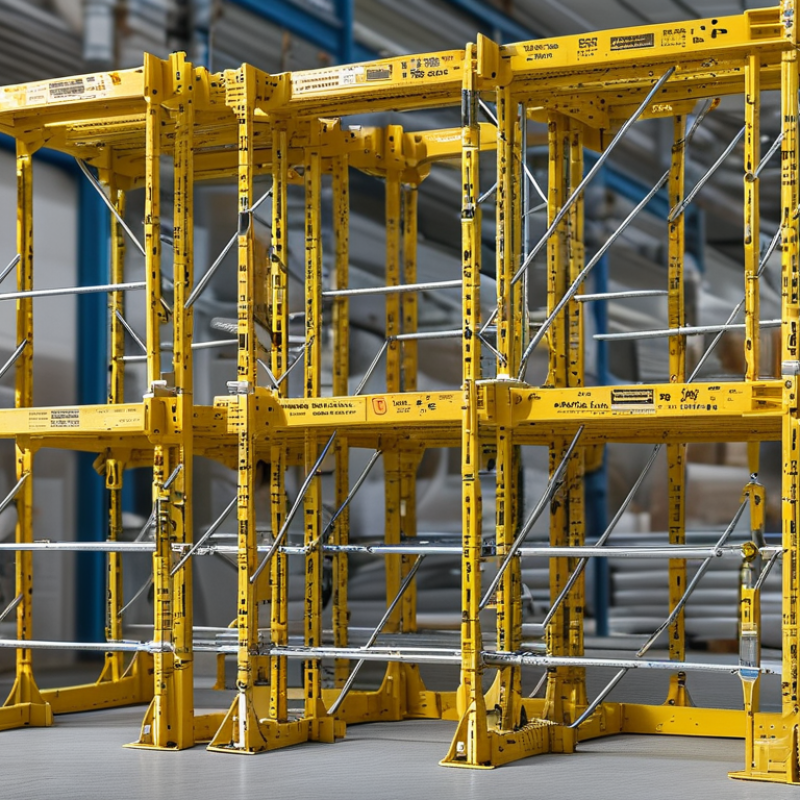
A complete system includes standards, ledgers, diagonal braces, base jacks, adjustable collars, platforms, guardrails, and access components. Each part must fit accurately, lock firmly, and resist repeated site use. Small gaps around rosettes can affect alignment and stability.
EN 12811-1 identifies scaffold load classes from 0.75 to 6.0 kN/m².
These classes describe allowable working-area loads, including workers, tools, materials, and platform effects.
Class 1 supports 0.75 kN/m², while Class 6 supports 6.0 kN/m².
Higher loading requires stronger platforms, closer standards, reliable bracing, and verified foundation conditions.
A supplier should provide technical drawings, material specifications, test records, and clear load tables.
Do not accept a certificate without checking its scope.
Site experience shows that many failures begin with poor setup, not weak steel.
Uneven ground, missing braces, overloaded platforms, and incomplete guardrails create serious risks.
I would also question suppliers offering one universal configuration for every project. It sounds convenient, but real structures need calculation and competent inspection.
The practical detail matters: base plates should sit fully on stable support, ledgers should lock completely, and damaged components should be removed.
Even experienced teams can overlook a loose wedge. Careful checking remains necessary.
Global Supplier Ranking: EN 10219 Steel, ISO 9001, and Traceability
A credible ringlock scaffolding supplier ranking should begin with steel control, not catalogue size. EN 10219 specifies cold-formed welded structural hollow sections, including dimensional tolerances and mechanical properties. Buyers should request mill certificates showing yield strength, tensile strength, chemical composition, and heat numbers. World Steel Association data reports approximately 1.89 billion tonnes of crude steel production in 2023. That scale makes material verification essential.
ISO 9001 certification indicates a documented quality management system, but it does not automatically prove perfect scaffolding. The ISO Survey 2022 recorded 1,265,216 ISO 9001 certificates worldwide. Stronger suppliers connect this system with incoming inspection, welding procedure control, load testing, and corrective-action records. Traceability should follow each ledger and standard from steel coil to finished component. Batch labels should remain readable after galvanizing and transport. Records matter.
For global buyers, ranking criteria can assign the highest value to verified EN 10219 steel, current ISO 9001 certification, and complete digital traceability. Independent audits should sample heat numbers against production files. Inspectors can also check ring welds, rosette dimensions, pin fit, and coating thickness on site. Do not guess. A supplier may present polished certificates while offering weak production evidence. This ranking method is practical, though not flawless; shipping history, local inspection access, and after-sales response still deserve careful review.
Top Ringlock Scaffolding Suppliers for Global Buyers — Global Supplier Ranking Reference
EN 10219 steel strength benchmarks with ISO 9001 and material-traceability checkpoints for international procurement.
EN 10219 Steel
Minimum yield strength shown for common structural hollow-section grades at thicknesses up to 16 mm.
ISO 9001
Buyer checkpoint for documented quality-management processes, corrective actions, and production controls.
Traceability
Verify that heat numbers, mill certificates, batch records, and inspection reports remain linked to delivered components.
Reference values are based on EN 10219-1 nominal minimum yield-strength grades. This chart compares material benchmarks and procurement controls; it does not rank individual companies.
Top Ringlock Suppliers by Capacity, Certifications, Regions, and Export Reach
Top Ringlock Scaffolding Suppliers for Global Buyers
Reliable ringlock suppliers should be compared by production capacity, certifications, regional experience, and export reach. Capacity is more than a factory’s stated monthly tonnage. Buyers should check welding lines, tube-forming equipment, hot-dip galvanizing space, and storage yards. A supplier producing 5,000 tons monthly may still struggle with urgent orders if scheduling is weak.
Certifications require careful verification. Ask for current quality-management certificates, material test reports, dimensional inspection records, and loading-test evidence. Standards such as EN 12810 and EN 12811 may suit European projects, while other regions may require different technical documents. Certificates alone are not enough. Factory audits, sample checks, and traceability records provide stronger evidence.
Regional experience can reveal practical strengths. Suppliers serving Southeast Asia may understand humid storage conditions, while exporters to the Middle East may prepare better for heat, dust, and long-distance transport. Check container-loading photos, packing methods, port access, export documents, and previous delivery schedules. Capacity alone can mislead. The difficult lesson is that a large factory can still miss shipment dates. Smaller suppliers may offer closer communication, but their backup production options could be limited. That trade-off deserves honest review.
Buyer Due Diligence: OSHA 1926.451, 4:1 Stability, and Test Records
Global buyers should treat scaffold purchasing as a technical verification process, not a price comparison. OSHA 1926.451 requires scaffolds to support their own weight and intended loads safely. Ask suppliers for clear design information, component specifications, and inspection procedures. Vague assurances are not enough.
Check the 4:1 stability rule carefully. A supported scaffold exceeding four times its minimum base dimension generally needs restraint, such as ties, guys, or braces. Confirm how the supplier defines height and base width. Review tie spacing, anchor capacity, and site conditions with a qualified professional. A wider-looking frame may still be unstable. Small measurement errors matter.
Request traceable test records for tubes, frames, couplers, welds, and finished assemblies. Records should show dates, batch numbers, test methods, acceptance criteria, and responsible inspectors. Load testing may be appropriate for certain components, but one certificate cannot prove every assembly is safe. Compare documents with delivered markings and sample dimensions. Check for missing pages or inconsistent serial numbers. That happens more often than buyers expect. I would also keep photographs from receiving inspections, because paperwork can be correct while packaging damage remains unnoticed. Supplier experience matters, but independent review adds stronger evidence. Suppliers unable to explain failures, tolerances, or retest decisions deserve closer scrutiny.
Total Cost Comparison: Freight, Galvanizing, Lead Times, and MOQ Data
For global buyers, ringlock scaffolding price is only the first line. A practical comparison must include freight, galvanizing, lead time, and MOQ. Ask each supplier to quote the same steel grade, tube dimensions, finish, packing method, and delivery term. Otherwise, a low factory price can hide expensive port handling or inland transport. Use cost per usable tonne, not cost per component.
Freight changes sharply with destination, season, and container utilization. Request full-container and less-than-container estimates when your order is small. Galvanizing may add roughly 10–20% to the purchase price, depending on steel weight and coating requirements. It can also add several production days. Confirm whether the quoted finish is hot-dip galvanized, pre-galvanized, or painted. They are not equivalent in service life. Moisture inside bundled standards is an often-missed risk.
Lead times should be separated into production, inspection, port booking, and transit. A quoted 25-day lead time may exclude vessel delays. Ask for a dated production schedule and recent shipment evidence. MOQ data matters too. Some factories accept mixed sizes within one container; others require separate batches. Smaller MOQs may raise unit costs but reduce dead stock. Larger orders can lower freight per tonne, yet cash stays locked longer. Estimates are not invoices. Recheck duties, destination charges, packaging waste, and local unloading before approving the purchase.

 +86 18531742341