Top Ringlock Scaffolding Stairs Manufacturers Worldwide
Ringlock Scaffolding Stairs are more than a convenient way between working levels. Their layout affects how crews move, carry tools, and leave a platform during an emergency. A secure stair tower should feel steady underfoot, with clear landings, consistent step spacing, and handrails that remain easy to grip. Small details matter.
The safety case is substantial. OSHA reports that about 2.3 million construction workers regularly work on scaffolds. The agency has estimated that proper scaffold protections could prevent 4,500 injuries and 50 deaths each year. Dr. David Michaels, former U.S. Assistant Secretary of Labor for OSHA, has stated, “Falls are the leading cause of death in construction.” These figures are not specific to ringlock stairs, but they show why access design deserves careful scrutiny.
This guide introduces leading Ringlock Scaffolding Stairs manufacturers worldwide and the factors buyers can compare: system compatibility, load documentation, corrosion protection, replacement-part access, and site support. A catalog image cannot prove how a stair tower performs in rain, under repeated use, or on a crowded site. Ask for drawings and test records. Check the details. Supplier claims vary, and even a polished product can leave practical questions unanswered.
What Ringlock Scaffolding Stairs Are and How They Work
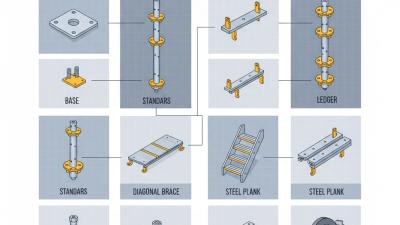
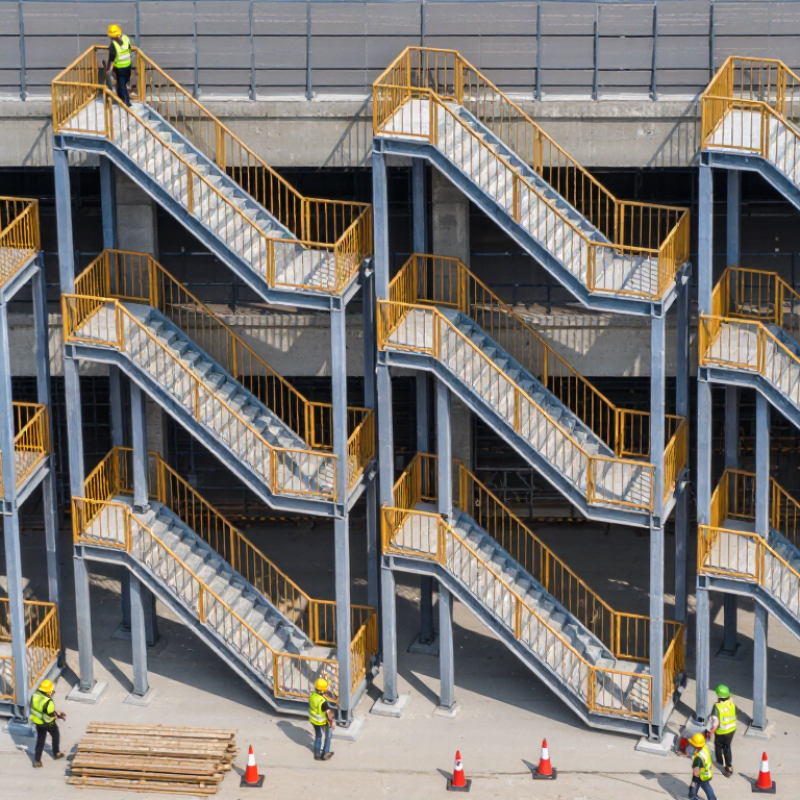
Ringlock scaffolding stairs create a defined route between working levels. Vertical standards carry circular rosettes, while ledgers and diagonal braces lock into them with wedge connections. Stair flights attach to the scaffold bay, often with a landing between levels. Exact fittings vary by system, so components should not be mixed casually.
The geometry matters. A steady rise, clear tread, and secure handrails help workers climb while carrying tools. OSHA’s construction scaffold standard, 29 CFR 1926.451(e), requires access when a platform is more than 2 feet above or below the access point. OSHA’s stairway rule, 29 CFR 1926.1052, sets a 36–37-inch stairrail height for covered construction stairways. These are US requirements, not universal design rules. Check local standards and the system’s instructions.
A practical inspection looks for loose wedges, bent stair treads, blocked landings, and movement at the base. Feel the connection. A stair tower can look square yet shift under repeated foot traffic if its ties or foundations are poor. That detail is easy to underestimate. Load limits and safe configuration depend on the specific equipment and site conditions; a competent person should verify both before use.
Key Components, Design Features, and Safety Standards
Top Ringlock Scaffolding Stairs Manufacturers Worldwide
A ringlock stair tower is more than a set of steps. Its standards, ledgers, stair stringers, treads, and landings must work as one stable access system. Locking rosettes help connect components at multiple angles, while base jacks and properly placed ties support the tower. On site, check that each wedge is fully seated and each tread is clear of mud or loose materials. Small details matter.
Good design balances safe access with predictable loads. Look for slip-resistant treads, secure handrails, guardrails at exposed edges, and gates at landings. OSHA’s scaffold safety guidance estimates that protecting workers from scaffold-related accidents could prevent about 4,500 injuries and 50 deaths each year. OSHA standard 29 CFR 1926.451 covers scaffold access and fall protection; EN 12811-1 sets performance requirements for temporary work equipment. Requirements vary by jurisdiction and project. I would not treat a standard-compliant drawing as proof that an assembled tower is safe; inspection and correct erection still matter.
Tips: Before use, inspect connections, ties, base support, and access gates. Keep landings clear. Record defects and remove damaged components from service. When the setup feels awkward, pause and reassess it.
How to Assess Ringlock Stair Manufacturers Worldwide
Assessing ringlock stair manufacturers worldwide starts with the stair itself, not a polished catalog.
Ask for drawings showing tread width, rise, landing dimensions, and connection details. Details matter. Compare these against the scaffold system used on your project. A stair tower that looks compatible may still have mismatched ledgers or awkward access points.
Request material certificates, welding procedures, coating specifications, and inspection records tied to production batches. Ask how rated loads were established and whether test reports identify the exact stair configuration. Ask for proof. Have a competent engineer review load data, guardrails, and access clearances before purchase. A familiar-looking stamp is not enough if its model number differs from the supplied unit. Check sample welds and coating for bare edges, rough buildup, or blocked fitting holes.
Assess delivery reliability through realistic lead times, packing lists, replacement-part availability, and clear answers across time zones. Request references for projects with similar height, climate, and use. A video call can reveal more than a brochure; ask staff to show a stair connection and identify its locking points. One awkward question can help. Even a careful review can miss a detail, so record unanswered questions and resolve them before ordering.
Global Manufacturing Regions and Supplier Capabilities
Ringlock stair suppliers are concentrated in regions with strong steel-processing and fabrication networks, but national output alone does not prove product quality. World Steel Association’s World Steel in Figures 2024 reports 2023 crude steel production of 1,019.1 million tonnes in China, 140.2 million in India, and 126.3 million across the European Union. These figures show the scale of regional steel ecosystems, not stair-unit production. Buyers should assess each factory’s own forming, welding, galvanizing, and load-testing capacity. A nearby steel source can shorten procurement routes. It cannot replace inspection.
Supplier capabilities differ. Some factories can produce modular stair flights, landings, guardrails, and compatible ringlock components in one facility. Others rely on outside processors, which may affect lead times and traceability. Request drawings, material certificates, weld inspection records, coating specifications, and test reports for the exact configuration. Where applicable, compare design documentation with EN 12811-1, while confirming project-specific requirements separately. Small details matter. Check tread spacing, handrail fit, and how the stair connects to the scaffold bay.
Tips: Ask for a sample inspection and a documented production plan. Confirm packing dimensions and replacement-part availability before ordering. A polished catalogue is not factory evidence; verify the process where possible. Teams sometimes miss this step. That can create avoidable delays on site.
Regional crude steel production provides context on the industrial base supporting scaffold manufacturing; it is not a direct measure of ringlock stair output or supplier capacity. Source: World Steel Association, 2023.
Choosing a Manufacturer for Project and Site Requirements
Choosing a ringlock stair manufacturer starts with the site, not a catalogue. Measure the available footprint, working heights, access points, and ground conditions. A narrow urban site may need compact landings, while uneven terrain can affect base adjustment and tower stability. Ask for project-specific load calculations, stair geometry, connection details, and clear assembly instructions. Details matter. Verify that the proposed system is compatible with the scaffold already planned, rather than assuming components from different systems will fit safely.
The U.S. Bureau of Labor Statistics’ Census of Fatal Occupational Injuries recorded 1,069 construction fatalities in 2022; 395 involved falls. This makes safe, predictable access a practical selection criterion, not a cosmetic feature.
Compare documented capacity, slip-resistant tread design, guardrail arrangements, corrosion protection, inspection records, and replacement-part availability. Ask how the manufacturer supports site crews when layouts change or components arrive damaged. A drawing can look complete, yet overlook a delivery route or a doorway that blocks assembly. Review the layout with the people who will install and use it, then revisit assumptions after a site mock-up. One detail may still be missed.

 +86 18531742341