Leave Your Message

China Best Scaffolding Components Suppliers for Buyers

Choosing China’s best scaffolding suppliers is not simply a search for low prices. Buyers need components that match project specifications, arrive consistently, and come with clear inspection records. A coupler that does not fit a tube or a frame with unclear dimensions can disrupt work on site. Small details matter.

The safety stakes are substantial. The U.S. Occupational Safety and Health Administration (OSHA) has cited an estimate that about 2.3 million construction workers, or 65 percent of the U.S. construction workforce, work on scaffolds. OSHA also estimated that improved scaffold protection could prevent 4,500 injuries and 50 deaths each year. These are U.S.-based estimates, not a current global count, but they show why component quality and documentation deserve close attention.

For international buyers, evaluating Scaffolding Components suppliers means looking beyond catalogue photos. Check material specifications, dimensional tolerances, welding and galvanizing processes, batch traceability, and available load-test or quality records. Confirm that samples match the production order, and clarify packaging, lead times, and replacement procedures before shipment. Not just price.

A supplier may present polished certificates and still leave practical questions unanswered. Buyers should verify what each document covers and whether it applies to the products being purchased. This guide introduces Chinese suppliers and the criteria buyers can use to compare them. No shortlist replaces independent checks; supplier claims should be tested against project requirements.
China Best Scaffolding Components Suppliers for Buyers

Types of Scaffolding Components Available from Chinese Suppliers

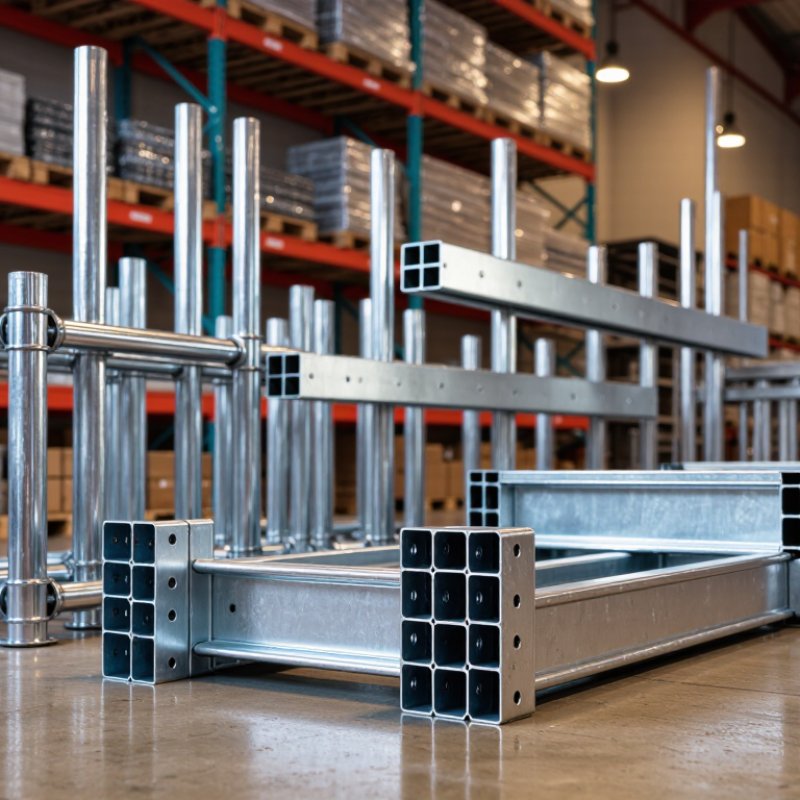
Chinese suppliers commonly offer tubes, couplers, modular system parts, frames, and access components. Tube-and-coupler sets use steel tubes with right-angle or swivel couplers. Ringlock and cuplock systems use vertical standards, horizontal ledgers, and locking nodes. Frame systems suit repetitive layouts. Small parts matter. Base plates and adjustable jacks help level standards; braces reduce sway, while steel or timber planks form working platforms. Guardrails, toe boards, and stair units support safer access when specified for the system.

Grand View Research estimated the global scaffolding market at USD 52.8 billion in 2022 and forecast a 5.5% compound annual growth rate from 2023 to 2030. This market-level estimate signals broad demand, not the share or quality of any component type. Buyers should compare tube diameter, wall thickness, steel grade, weld finish, and coupler fit. A clean coating can look reassuring, but it does not verify load capacity.

Ask suppliers for drawings, material certificates, dimensional tolerances, and inspection records. Check that ledgers, braces, and standards match the same system; similar-looking parts may not connect securely. A sample assembly can reveal loose wedges or awkward access before a larger order. It takes extra time. Yet catalog photos rarely show fit problems, and that is easy to overlook.


How China’s Scaffolding Supply Industry Is Organized

China Best Scaffolding Components Suppliers for Buyers

How China’s Scaffolding Supply Industry Is Organized

China’s scaffolding supply industry is not one uniform market. It includes steel producers, component factories, specialist fabricators, and export-oriented suppliers. Each layer handles different work. Steel producers supply tube, plate, or coil; factories turn these materials into frames, couplers, braces, and adjustable supports. Some suppliers make a narrow range, while others coordinate several production steps.

For buyers, this structure affects lead times and quality checks. A supplier may manufacture parts in-house or source them from nearby workshops. Ask who makes each item, what material specifications apply, and how dimensions are inspected. A sample coupler should fit its intended tube without forcing or excessive movement. Details matter. Written drawings, inspection records, and clearly identified batches make it easier to trace issues before shipment.

Export-focused suppliers often coordinate packaging, documentation, and freight, but this does not automatically mean they control every factory process. Verify the actual production location and agree on inspection points before ordering. Check weld consistency, surface finish, and component measurements against the approved specification. Small variations can complicate assembly on site. The supply chain can look tidy on a quotation and less tidy on the factory floor. That uncertainty deserves a closer look, not an assumption.

China Best Scaffolding Components Suppliers for Buyers - How China’s Scaffolding Supply Industry Is Organized

Supplier Segment Typical Products or Services Role in the Supply Chain Key Buyer Checks Relevant Standards or Documents
Steel tube and fabrication manufacturers Scaffold tubes, cut-to-length sections, welded parts, and basic fabricated components. Supply primary steel items to component makers, system manufacturers, contractors, or trading and export businesses. Confirm steel grade and dimensions against the purchase specification; check wall thickness, weld quality where applicable, traceability, and inspection records. Material test certificates and purchase specifications; applicable national or destination-market requirements for the intended scaffold system.
Coupler and fitting manufacturers Right-angle, swivel, and sleeve couplers, together with other tube-and-coupler fittings. Produce connection hardware used to join scaffold tubes and assemble bracing or structural connections. Verify dimensions, materials, finish, fit with the specified tube size, and test evidence for the intended application. Do not assume fittings from different systems are interchangeable. EN 74 series may be relevant to couplers and related fittings where specified; confirm the applicable part and edition for the project.
Modular scaffold system manufacturers System-specific standards, ledgers, braces, base components, and connection parts, including ringlock- or cuplock-type systems. Provide coordinated components designed to work as a defined system, often with layouts, load information, and assembly guidance. Request system drawings, component compatibility information, allowable-load data, instructions, and evidence that test results cover the supplied configuration. EN 12810 and EN 12811 are relevant European scaffold standards; project requirements and the exact system configuration determine applicability.
Platform and access-component manufacturers Steel or aluminum scaffold decks, access ladders, stair units, toe boards, and related platform parts. Supply working platforms and access components that are selected to suit the scaffold system and site plan. Check dimensions, rated capacity, slip-resistant features, locking or retention details, material, and compatibility with supporting members. Use the applicable project and destination-market requirements for platforms and access; request product specifications and test documentation.
Surface-treatment and finishing providers Hot-dip galvanizing, paint, powder coating, or other specified protective finishes. Apply corrosion-protection finishes either in-house or as a separate processing step in the manufacturing chain. Specify coating type and acceptance criteria; inspect coverage, coating condition, drainage or venting provisions where relevant, and handling damage. Agree the finish specification and inspection method in the contract; coating requirements depend on the product, environment, and buyer specification.
Testing and inspection providers Dimensional inspection, material verification, mechanical or load testing, and production or pre-shipment inspections. Provide evidence to help buyers assess whether products meet agreed specifications and test plans. Check the testing scope, sample identification, test method, report date, and whether the tested samples represent the ordered products and production batch. Request reports tied to the relevant product and specification. ISO 9001 concerns quality-management systems; by itself, it is not product certification.
Export and project-supply integrators Mixed component sourcing, order consolidation, export documentation, packaging, and coordination of shipment or project requirements. Coordinate products from one or more production sources for buyers who need a consolidated order or export support. Clarify who manufactures each item, who is responsible for quality, how substitutions are controlled, and what inspection and shipping documents will be supplied. Agree a component schedule, approved drawings, inspection plan, packing list, and required customs and transport documents before production.
Standards and documentation depend on the product type, project specification, and destination market. Buyers should verify the current applicable requirements and request evidence for the exact components and configurations being purchased.

Criteria for Evaluating Scaffolding Component Suppliers

A reliable scaffolding component supplier should be assessed on evidence, not just a low quotation. Ask for material specifications, inspection records, and clear identification of each batch. For couplers, check that samples fit the intended tube size without rocking or forcing. For frames and braces, inspect weld consistency, straightness, and finish in person when possible. Small defects matter. Request test information for load-bearing parts, and confirm which standards or project requirements the documents address. A certificate without traceable product details is less useful than it looks.

Production control and communication deserve equal attention. Ask how the supplier checks dimensions, manages rejected parts, and handles changes to materials or processes. A factory visit can reveal practical details, such as organized storage and calibrated measuring tools, but one visit cannot prove every shipment will be consistent. Review sample quality, delivery records, packaging, and the supplier’s process for resolving defects. Get lead times and replacement terms in writing. Price matters, of course, but delayed or mismatched components can disrupt an entire site schedule. No checklist catches everything; buyers should note what remains uncertain and verify it before placing a large order.

China Scaffolding Component Suppliers: A Technical Evaluation Reference

Reference working-area load classes specified in EN 12811-1. Use these values to help assess whether a supplier can provide components for the required scaffold duty.

The chart shows nominal uniformly distributed loads for working-area load classes 1–6: 0.75, 1.5, 2.0, 3.0, 4.5, and 6.0 kN/m². Confirm component compatibility, intended use, and the complete scaffold design with qualified professionals; load class alone does not establish system suitability.

Quality Standards and Certifications Buyers Should Check

For China-based scaffolding-component suppliers, verify product standards and factory controls separately. EN 12810 and EN 12811 cover façade scaffolds and performance requirements; ask which clauses apply to couplers, frames, and braces. ISO 9001 indicates a quality-management system, not that every fitting passed product testing. A small distinction, but an important one.

OSHA estimates that scaffolding hazards cause about 4,500 injuries and 60 deaths annually in U.S. workplaces. Its scaffold safety guidance highlights load capacity, platform access, and inspection. The U.S. Bureau of Labor Statistics recorded 1,075 fatal work injuries in construction in 2023. These figures are not China-specific, but they show why component quality deserves careful scrutiny.

Request current certificates and check their scope, issuing body, expiry date, and factory address. Match each test report to the exact product model, steel grade, coating, and production batch. Review mill certificates, weld records, dimensional tolerances, and proof-load results against the purchase specification. Photos help. They do not replace inspection. I would still sample actual couplers: paperwork can be tidy while a pin or thread varies. Ask for batch traceability and corrective-action records before shipment. ISO 45001 can support confidence in workplace-safety processes, but it is not product certification.

Sourcing, Pricing, and Shipping Considerations for Buyers

When comparing scaffolding component suppliers in China, request drawings, material specifications, and quotations for the same item quantities. Check tube diameter, wall thickness, connection dimensions, and surface treatment. Small differences can prevent parts from fitting existing equipment. Ask for recent inspection records or material test documents, and confirm which items they cover. A sample helps. So does a clear checklist.

Pricing should show more than a unit cost. Ask whether tooling, packaging, inspection, and inland transport are included, and whether prices change with order volume. Compare equivalent specifications rather than choosing the lowest quote. For galvanized parts, confirm the stated coating requirement and how it is measured. A polished quotation is not proof of consistent production; request photos or inspection results from the actual order where practical.

Shipping costs depend on shipment size, packing method, destination, and agreed delivery terms. Confirm carton or bundle dimensions, gross weight, loading plan, and estimated production time before booking freight. Clarify who arranges export documents and cargo insurance under the selected terms, such as FOB or CIF. Leave room for delays: port schedules and customs checks can shift arrival dates. One easy-to-miss detail is spare parts; even a small shortage can slow site assembly.