
 +86 18531742341




0102030405
How Construction Crews Use Scaffolding Couplers Safely and Efficiently on Site
2025-12-01
Scaffolding couplers may be small compared with the steel pipes and frames they hold together, but anyone who works on a construction site knows they have a direct influence on stability. A well-built scaffold—whether it’s a frame scaffold used for facade work or a ringlock tower supporting formwork—relies on couplers that are tightened correctly, kept clean, and matched with the right pipes. Most experienced crews avoid tightening a coupler in one go. Instead, they let the steel pipe settle into position first, check the angle by hand, and then lock the bolt gradually. This habit protects the threads and keeps the load capacity aligned with the direction of force, which is especially important when the scaffold is supporting slab formwork or helping carry temporary loads during concrete work.
On busy sites, couplers deal with more dirt than most people expect. After rain or concrete casting, fine sand often gets into the threads, making the bolt stiff the next day. Many workers keep a brush or cloth in their toolbelt for a quick clean before tightening. It takes only a few seconds, but it prevents jamming and avoids the “false tightness” that happens when debris gives the illusion of a secure grip. With heavy-duty steel pipe, even a small amount of grit can change the tightening torque, so routine cleaning has become almost a silent rule among seasoned crews.
Angle accuracy is another detail crews pay close attention to. A right-angle coupler should hold the pipe at a true ninety degrees; even a slight misalignment can cause a horizontal brace to drift under load. Some workers rely on visual alignment, but many prefer touching the pipe to check if everything lines up. Swivel couplers get even more attention, since their adjustable system allows a wide range of angles. Before locking them, workers often consider the direction of the load, the nearby slab edges, or the position of the formwork, then rotate the coupler so the pipe naturally follows the stress path instead of fighting it.
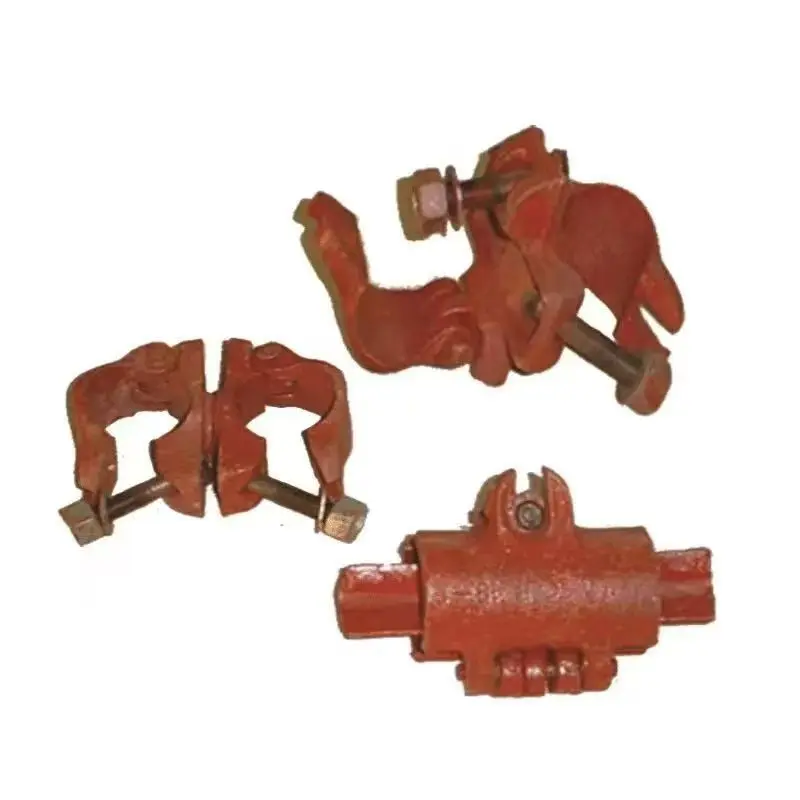
Maintenance plays a big role in keeping these accessories dependable. Couplers that come off the scaffold at the end of the day are cleaned before being stored, especially those used in wet or dusty areas. A light oil coat on the bolt helps prevent rust, which keeps the threads smooth and extends the life of the equipment. On well-managed sites, couplers are never thrown directly onto damp ground; they’re stored on racks or pallets the same way steel pipe is handled. Bent bolts, cracked clamp mouths, or stripped threads are usually removed from circulation immediately, since a single faulty coupler can compromise an entire scaffold bay.
Although scaffolding couplers are just one part of the larger system of tubes, frames, and platforms, their role is critical. They tie every connection together, and a scaffold is only as stable as the couplers that hold it. When workers take a moment to align each pipe, clean the threads, and store the accessories properly, the whole structure benefits—from better construction safety to a longer service life for the equipment. In daily work, these small habits make a scaffold feel more solid underfoot, no matter whether it’s built with traditional steel pipe, a ringlock grid, or a compact Frame Scaffold for interior renovations.